
Geared vs. Gearless Elevators: How to Choose the Right System for Your Building

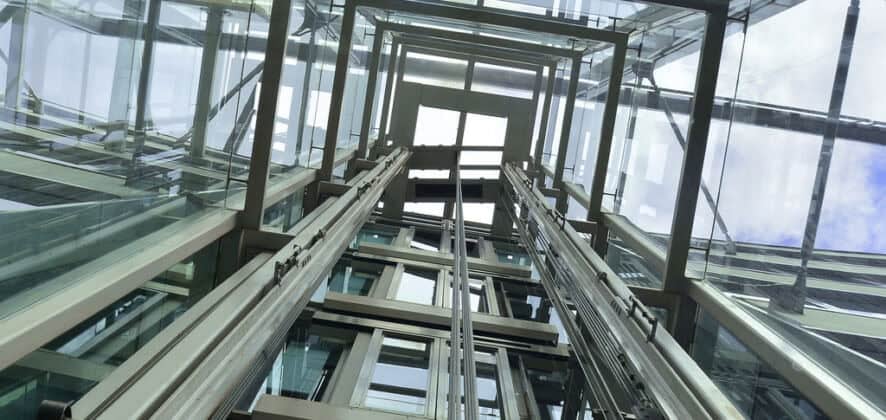
Geared vs. gearless elevators: What are the main differences, and when should you choose one over the other? For building owners, architects and engineers, elevator selection is a long-term decision that shapes construction costs, ongoing energy bills and tenant experiences for decades.
Both systems fall under the traction elevator category, which uses steel ropes, a sheave and a counterweight. What differs is how the motor drives that sheave.
The right choice depends on your building’s height, expected traffic volume, budget and space constraints.
In this post, we’ll break down the mechanics, pros and cons of each and best-fit scenarios so you can make a confident, informed decision.
Key Takeaways
- The main difference is the drive mechanism. Geared elevators use a gearbox between the motor and sheave; gearless connect the motor directly.
- Speed and building height are the biggest deciding factors. Geared systems suit buildings up to 5–15 floors; gearless systems handle high-rises with speeds up to 2,000 ft./min.
- Geared elevators cost less upfront but more over time. Lower purchase and installation costs are offset by higher energy use and more frequent maintenance.
- Gearless elevators are a long-term investment. Higher initial costs are offset by greater energy efficiency and fewer maintenance needs over the life of the building.
- Ride quality favors gearless systems. Less vibration and noises make them the better choice for luxury residential, hospitality or any setting where passenger experience matters.
- The right choice depends on your building’s specific needs. Budget, building height, traffic volume and space constraints should all factor into the decision.
What Are the Key Differences Between a Geared & Gearless Elevator?
When Should I Choose a Geared Elevator?
When Should I Choose a Gearless Elevator?
What Is a Geared Elevator?
A geared elevator uses an electric motor connected to a worm or helical reduction gear, which then turns the drive sheave (pulley) to control the movement of the elevator car.
In geared elevators, there is a gearbox attached to the motor that drives the wheel and moves the ropes. Geared machines can reach speeds up to 500 ft./min. These models will have a middle-of-the-road cost in terms of initial investment, maintenance costs and energy consumption.
Key components of a geared elevator include:
- AC or DC drive motor
- Reduction gearbox
- Drive sheave
- Steel hoist ropes
- Counterweight
- Dedicated machine room housing the assembly
Common Use Cases
A geared elevator is a standard choice for low- to mid-rise buildings that are typically up to 10–15 floors. They are widely used in older commercial buildings, hospitals, hotels and residential mid-rises where moderate speed is acceptable. Geared elevators are also typically used for larger capacity service elevators or freight elevators.
Pros of Geared Elevators
- Strong lifting power: The gearbox increases torque, so geared elevators can handle heavier loads without needing an oversized motor.
- Cost-effective upfront: Compared to gearless systems, geared elevators are typically less expensive to purchase and install.
- Easier maintenance and repair: The components are typically more accessible and familiar to many technicians, which can simplify servicing.
- Good speed control: Geared elevators offer reliable, controlled speeds, usually up to about 500 feet per minute. This works well for most commercial buildings.
Cons of Geared Elevators
- Noisier operation: The gearbox creates more noise and vibration compared to gearless elevators, which can be noticeable in quieter buildings.
- More maintenance over time: Gears require lubrication and can wear down, meaning more ongoing maintenance than gearless systems.
- Less energy efficient: Because of the friction in the gearbox, they typically use more energy than modern gearless or machine-room-less (MRL) elevators.
- Slower than gearless systems: They’re not ideal for high-rise buildings where fast travel speed is important.
What Is a Gearless Elevator?
A gearless elevator is one where the motor is connected directly to the sheave, eliminating the need for a gearbox. The direct-drive design allows for faster, smoother operation, often reaching speeds up to 2,000 feet per minute, which makes them ideal for high-rise buildings. While a gearless elevator typically comes with a higher upfront cost, it’s more energy efficient and generally requires less maintenance than geared systems.
Key components of a gearless elevator include:
- Hoisting machine (motor and sheave)
- Counterweight
- Hoist ropes (cables)
- Controller
- Brake system
Common Use Cases
A gearless elevator is ideal for high-rise office buildings, hotels and luxury residential towers, hospitals and large institutional facilities, and any building that requires fast, smooth and quiet operation. Gearless machines are also used in machine room-less applications, which may offer space savings and the opportunity to greatly reduce overhead and machine room space.
Pros of a Gearless Elevator
- High speed: Gearless elevators can reach much higher speeds than geared systems, making them well-suited for tall buildings with heavy traffic.
- Energy efficient: With no gearbox, there’s less friction and energy loss, which can reduce overall power consumption.
- Smoother, quieter ride: The direct-drive system minimizes vibration and noise, which can improve the overall passenger experience.
- Lower long-term maintenance: Fewer moving parts means less wear and fewer components that require regular servicing.
Cons of a Gearless Elevator
- Higher initial costs: Gearless systems are more expensive to purchase and install due to their advanced design and components.
- Complex installation: They often require specialized expertise and careful setup, which can increase installation time and cost.
- Space considerations: Some systems may require a dedicated machine room, though machine-room-less options are available.
What Are the Key Differences Between a Geared & Gearless Elevator?
The main difference between geared and gearless elevators comes down to how the motor drives the sheave, and how that impacts speed, efficiency, cost and maintenance.
Feature |
Geared Elevator |
Gearless Elevator |
| Drive mechanism | Uses a gearbox to connect the motor and sheave, increasing torque and controlling speed | Motor is directly connected to the sheave, eliminating the need for a gearbox |
| Speed | Up to ~500 ft./min. | Up to 2,000 ft./min. |
| Energy efficiency | Less efficient due to friction and energy loss in the gearbox | More efficient due to the reduced friction and fewer mechanical losses |
| Noise and ride quality | Produces more noise and vibration from the gear movement | Provides a smoother, quieter ride with minimal vibration |
| Maintenance | Requires more frequent maintenance, including lubrication and gear upkeep | Lower long-term maintenance needs, though repairs may be more specialized |
| Cost | Lower upfront cost, making it more budget-friendly | Higher initial investment, but potential long-term savings |
| Best use cases | Mid-rise buildings where cost and moderate speed are priorities | High-rise buildings or applications requiring speed, efficiency and comfort |
When Should I Choose a Geared Elevator?
A geared elevator is a smart choice for mid-rise buildings (typically 5–15 floors) where speed isn’t the top priority. It works well if you’re trying to manage upfront costs while still getting reliable performance. Geared systems are also a good fit for buildings with moderate traffic and for projects where ease of maintenance and repair are important.
When Should I Choose a Gearless Elevator?
A gearless elevator is an excellent option for high-rise buildings or any setting that requires fast, smooth and quiet operation. It’s ideal if you expect high traffic, want to prioritize energy efficiency or are designing a building where ride quality and performance matter most. While the upfront cost is higher, it can pay off over time through lower energy use and reduced maintenance needs.
Need Help Choosing the Right Elevator?
If you’re deciding between a geared and gearless elevator, we’re here to help. At Stanley Elevator, you’ll get expert guidance, clear communication and dependable support from start to finish. Reach out today to schedule your free consultation.
FAQs
Is a geared or gearless elevator better for a mid-rise building?
A geared elevator is typically the better fit for a mid-rise building (5–15 floors). They offer reliable performance at moderate speeds and come with lower upfront costs, making them a practical choice where high speed and premium ride quality aren’t the top priorities. That said, gearless systems are increasingly common in mid-rise buildings where long-term energy savings and ride quality are important.
Are gearless elevators worth the extra upfront cost?
For many buildings, gearless elevators are worth the extra upfront costs. While gearless elevators carry a higher purchase and installation price, they’re more energy efficient and require less maintenance over time. In high-traffic or high-rise buildings especially, those long-term savings can more than offset the initial investment.
Do gearless elevators require a machine room?
Gearless elevators do not always require a machine room. Traditional gearless systems do require a dedicated machine room, but machine-room-less gearless elevators are widely available and eliminate that requirement, which makes them a more flexible option for buildings with limited space.
Can a geared elevator be upgraded to gearless?
In many cases, yes, a geared elevator can be upgraded to a gearless elevator. Modernizing is a relatively common upgrade, particularly in older buildings looking to improve energy efficiency and ride quality. The feasibility depends on the existing shaft dimensions, electrical infrastructure and budget, so it’s worth consulting with a licensed elevator contractor to assess your options.
How long do geared and gearless elevators typically last?
Geared and gearless elevators can both typically last 20–30 years with proper maintenance, though lifespan varies depending on usage, environment and how well the system is serviced. Geared elevators may require more frequent component replacements due to gear wear, while gearless systems tend to have fewer parts that degrade over time, potentially extending their functional life. Some of the lighter-duty gearless machines in machine room-less products do not last as long as a traditional overhead application with a machine room.